5 Signs of a Subluxation
5 Signs of a Subluxation:
The Root Cause of Pain, Tenderness, or other Health Complications
Have you been suffering from a nagging ache or pain that has been persistent without resolution? You want to get back to a healthier lifestyle with more exercise, stretching, or walking but you’re limited by this pain. You’ve attempted to calm the area down with ice, heat, stretching, physical therapy or exercise but have had temporary or no success. You may be unsure about the next step. This is where Chiropractic treatments can help you.
As a chiropractor, I am searching for the root cause of your complaint. Let me help you understand the connection between that nagging ache, your nervous system, and how this can be the result of a spinal misalignment.
When a bone in the spine (the vertebrae) has moved out of its proper alignment, this is what we call a Subluxation. There are many signs we can see from the body that indicate the development of a subluxation and how it could be the root cause of that nagging ache, headache, sinus pressure, sciatica, or pain in the arms or legs. As a chiropractor, I am looking for the 5 signs of subluxation to ensure the problem is something we can help solve.
- Pain
- Pain (sharp, shooting, nagging, or achy) can be an obvious and, sometimes, first sign of spinal subluxation.
- Reduced Range of Motion
- When one side of the body has more movement than the other, we find there is asymmetry. An example of this is when your neck turns further to the left than it does to the right.
- Inflammation
- When there is pressure on a nerve, the body releases an inflammatory response to try to heal the ‘injury’. The release of inflammatory cells (histamine, bradykinin, and prostaglandins) causes the skin to appear puffy, like a marshmallow. You may notice your skin is puffy on one side of the spine versus the other.
- Muscle Spasms
- While some areas of the spine may feel puffy and inflamed, we are also looking for muscle spasms. These feel ropey and tight. The body uses the muscle to try to pull the vertebrae back into proper alignment.
- Temperature Imbalance
- As subluxations persist, there is an obvious difference in temperature on the skin between one side of the spine in comparison to the other. Think about when you sprain an ankle or wrist; the skin gets warm as blood flow moves into the area of injury. The body uses this same mechanism when there is an injury along the spine. As a result, we can measure this Thermal Balance to get a better understanding where underlying nerve irritation is occurring.
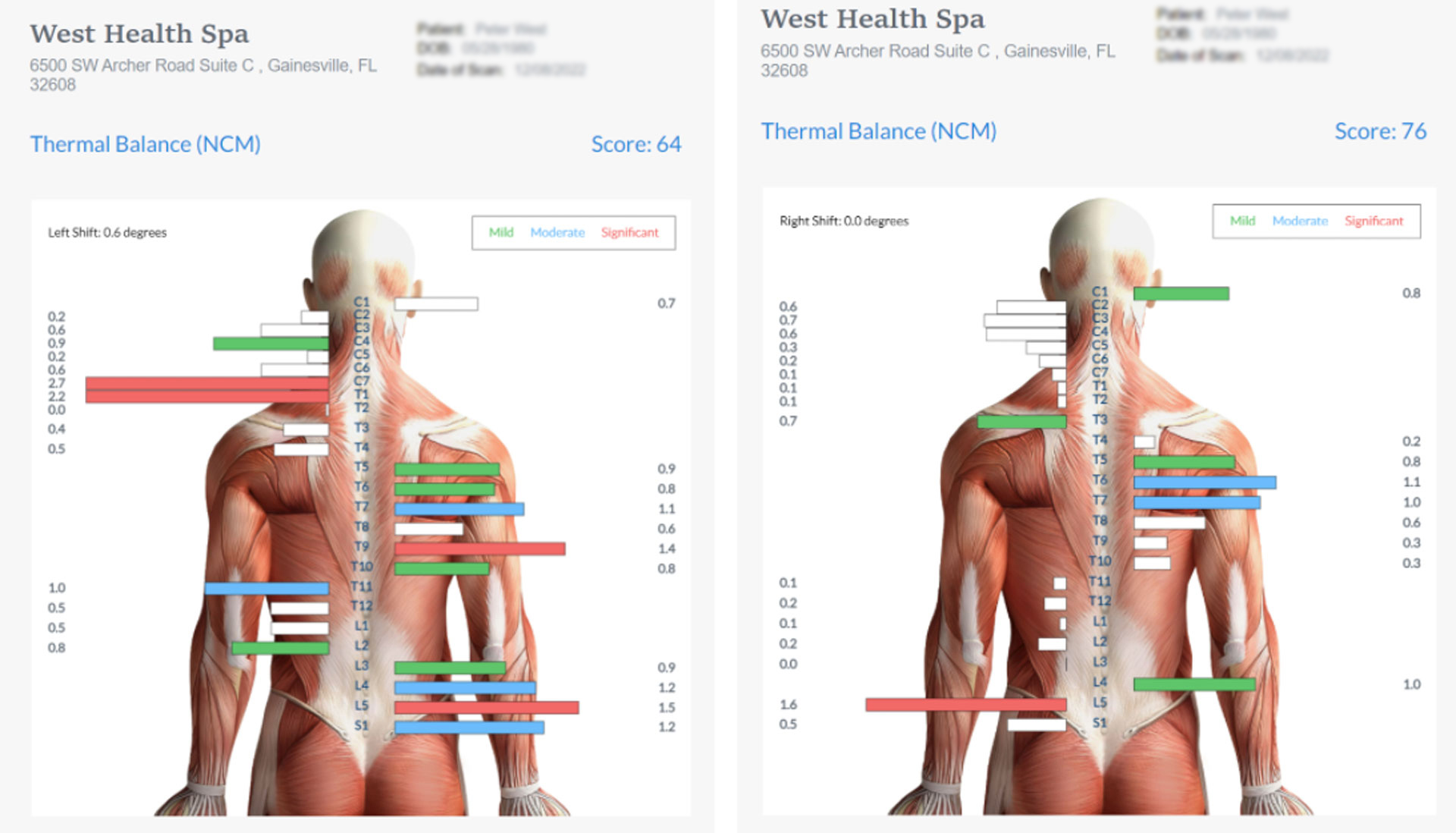 Understanding Thermal Balance Scores
Thermal Balance shows which level of spinal nerves are reacting out of normal ranges in their ability to regular tone of the blood vessels. The more irritation in a nerve, the more the body will alter the regulation of blood vessel tone. On the graph, the colored bars will transition from White-Green-Blue-Red depending on the severity of nervous system involvement.
This nervous system involvement is called Dysautonomia, and can affect heart function, blood pressure, bladder function, digestion, and even sexual function.